

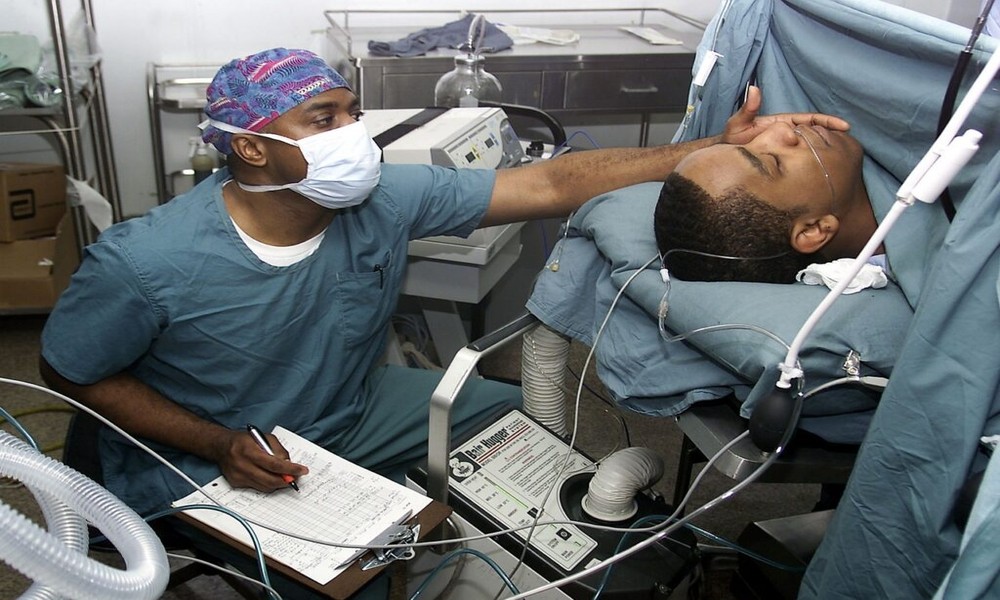
Most men who need a urological procedure – a vasectomy, a circumcision, a varicocele repair – don’t think much about where the procedure happens until they’re facing it. The default assumption is that a surgical procedure means a hospital or ambulatory surgery center, the logistical overhead that goes with those settings, and whatever experience has been described to them about procedures done under local anesthesia. The certified in-office operating room at Lazare Urology in Brooklyn operates differently from that default, and the difference matters in ways that aren’t immediately obvious until they’re explained. The procedures are the same. The surgical standards are the same. What changes is where the procedure happens, how the anesthesia is administered, and what that means for the experience of being a patient.
What Procedures Are Performed in the In-Office OR
The Lazare Urology in-office operating room is certified and equipped to perform a range of urological procedures that would otherwise require a hospital or outpatient surgery center setting:
Vasectomy is the most commonly performed procedure in the office OR. The no-scalpel technique takes approximately 20 minutes under IV sedation, with the patient typically leaving within an hour of arrival.
Adult circumcision, which involves more complex tissue management than a newborn circumcision and takes 30-45 minutes, is performed in the same setting with the same sedation approach.
Microscopic varicocelectomy – the microsurgical repair of varicoceles using optical magnification – requires the precision environment that the in-office OR provides. The procedure takes 1-2 hours depending on whether it’s unilateral or bilateral.
Vasectomy reversal, one of the more technically demanding microsurgical procedures in urology, is also performed in the in-office OR. The combination of microsurgical capability, sedation support, and a contained environment makes this feasible in the office setting rather than requiring hospital OR time.
The common thread is that all of these procedures are elective, planned, and involve anatomy where the difference between local anesthesia only and IV sedation is acutely felt by patients. Which is precisely why the sedation approach at Lazare Urology is not incidental to the patient experience – it’s central to it.
The Sedation Question: Why It’s More Than a Comfort Preference
When urological procedures are performed on or near the genitalia using local anesthesia only, the patient is awake and aware throughout. The injections needed to anesthetize the area are administered while the patient is conscious. Any sensation that escapes the local block – pressure, movement, warmth – occurs while the patient is present and alert. The psychological dimension of being awake during a procedure in a sensitive anatomical area creates a specific category of anxiety that local anesthesia alone doesn’t address.
This is not a minor point, and it’s not purely psychological. The anticipatory anxiety associated with a penile injection or scrotal injection is a real barrier. It’s the reason men delay vasectomies for years after deciding they want one. It’s the reason some men leave scheduled circumcision or varicocelectomy appointments without going through with them. The procedure isn’t necessarily as painful as they feared – but the anticipation of what it will feel like, while awake, drives avoidance behavior that has real clinical consequences.
IV sedation – administered by a board-certified anesthesiologist before any local anesthetic is given – eliminates the experience of those injections. The patient is sedated. The local anesthetic is still administered for post-operative comfort as the sedation wears off, but the patient is unaware of it being given. The procedure proceeds with the patient unaware. The next conscious experience is waking up with the procedure complete.
This is categorically different from being numbed but awake. The distinction matters to a large share of patients, and it matters specifically to the population of men who have been putting off procedures they’ve already decided they want.
What Hospital and Surgery Center Settings Actually Cost Patients
Beyond the anesthesia experience, the logistical and financial overhead of hospital and ambulatory surgery center procedures is meaningful and often underestimated by patients focused on the procedure itself.
Hospital facility fees are assessed on top of physician fees and are frequently substantial – sometimes more than the surgical fee itself. The billing complexity of hospital-based procedures, the involvement of multiple billing entities, and the unpredictability of what insurance will cover for facility charges creates financial uncertainty that in-office procedures eliminate.
The logistics of a hospital or surgery center visit are also more demanding than most patients anticipate. Pre-admission requirements, NPO (nothing by mouth) periods, arrival well in advance of procedure time, the time spent waiting in a pre-op area, post-anesthesia recovery time, and discharge through a separate nursing assessment all extend what might be a 30-minute procedure into a half-day or full-day commitment. For a man scheduling a vasectomy on a Friday with plans to be functional by Monday, the logistical footprint of a hospital procedure is a real consideration.
An in-office procedure at Lazare Urology, by contrast, involves arriving at the practice, being prepared for the procedure, completing the procedure, and recovering briefly before leaving – typically within a two-hour window for a vasectomy. The NPO requirements for IV sedation still apply, and a driver is required, but the experience is contained, predictable, and far less disruptive to a day.
The Safety Equivalence of an Accredited In-Office OR
The question patients sometimes raise about in-office procedures is whether safety is compromised by moving outside a hospital setting. For the procedures performed at Lazare Urology, the answer is no – and the explanation involves understanding what actually provides surgical safety in any setting.
Surgical safety comes from the training and competence of the surgical team, the quality of equipment and sterile technique, the capability to recognize and respond to adverse events during the procedure, and the monitoring of the patient under anesthesia. These factors are present in the Lazare Urology in-office OR because the OR is certified, because a board-certified anesthesiologist is present and managing anesthesia, and because the procedures performed are ones for which the risk profile is appropriate for an outpatient setting.
The procedures performed in the Lazare Urology OR are not high-complexity, high-risk operations requiring crash cart availability or intensive intraoperative monitoring. They are elective urological procedures on otherwise healthy adult males, performed under IV sedation, with well-characterized and low complication rates. The same procedures are performed in accredited ambulatory surgery centers with the same safety expectations. The in-office OR meets the same accreditation standards.
What the in-office setting doesn’t provide is the infrastructure for managing complications of entirely different procedure categories – major abdominal surgery, cardiac procedures, emergency situations requiring intensive resources. For the procedures Lazare Urology performs in the office OR, those resources are not relevant to the risk profile.
Scheduling Procedures at Lazare Urology’s In-Office OR
For men in Brooklyn, Manhattan, Queens, and the greater New York area who are considering vasectomy, circumcision, varicocelectomy, or vasectomy reversal, the in-office OR at Lazare Urology offers a medically equivalent and experientially superior alternative to hospital or surgery center scheduling. The sedation approach eliminates the specific barrier that keeps many men from following through on procedures they’ve already decided they want.
Contact Lazare Urology to schedule a consultation. The procedure can be discussed in the context of how it’s performed, what the experience looks like, and what the recovery involves – before any commitment is made.
