

Key Takeaways
- Canapés must suit standing guests who are holding drinks and moving between conversations.
- Service ratios and replenishment timing determine whether food reaches every guest.
- Clear planning for dietary needs, temperature control, and waste removal prevents visible disruption.
Introduction
Guests seldom stay in one place during a cocktail reception. They shift between conversations, move toward the bar, and gather near speakers or displays. In that environment, food must move with them. Canapés catering in Singapore works best when kitchen output, server routes, and venue layout operate as one system. If trays empty too quickly or items become difficult to handle, conversations pause and momentum drops. Before confirming a catering service in Singapore, evaluate how the provider manages movement, timing, and flow.
1. Is Every Item Designed For One-Handed Eating?
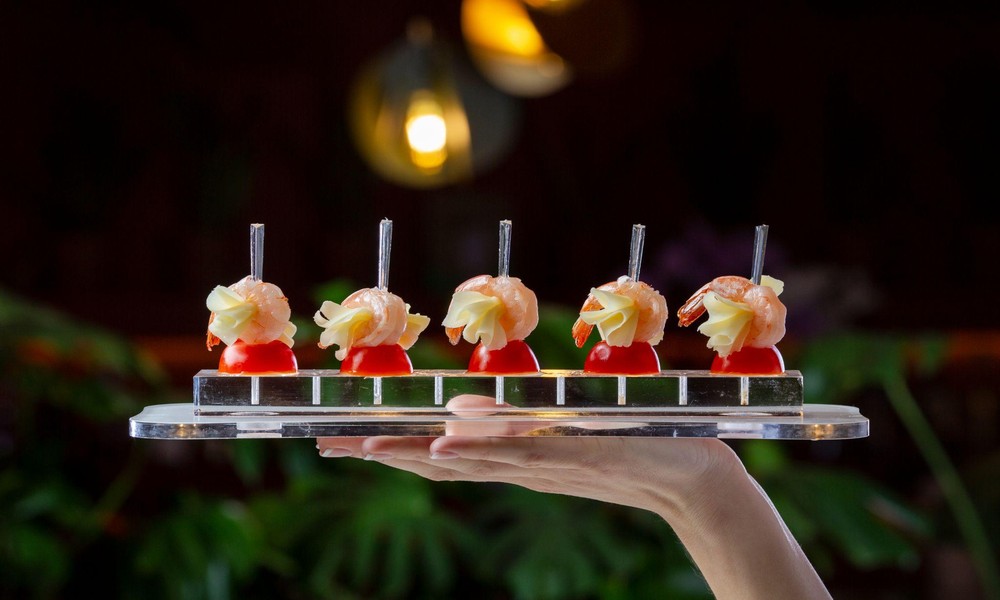
Picture a guest holding a drink and greeting a client at the same time. That guest cannot manage cutlery or balance a fragile tart shell. Each canapé should hold its shape, contain its filling, and finish in a single bite. Ask to see sample pieces in person, not just photos. Hold one yourself and check whether crumbs fall or sauce drips. If an item requires explanation on how to eat it, revise the selection. Design must support ease, not decoration.
2. How Will Food Circulate Across The Room?
Food must travel, not wait. Guests cluster naturally around high-traffic zones such as the bar or registration area. If servers stay near the kitchen entrance, half the room may never see a tray.
Clarify three practical details:
- Number of roaming servers during peak hour
- Planned walking routes across the venue
- Adjustments if one zone becomes congested
A clear circulation plan ensures balanced distribution rather than random coverage.
3. What Is The Replenishment Schedule?
Timing shapes perception. If trays appear only in the first thirty minutes, guests assume the supply has run out. If everything appears at once, early arrivals consume most of the selection.
Ask how the kitchen staggers output. Professional canapés catering in Singapore releases items in waves across ninety to one hundred and twenty minutes. Confirm that the team prepares smaller batches continuously instead of pre-assembling all items before service begins. A steady rhythm keeps guests engaged and prevents visible shortages.
4. How Will Guests With Dietary Needs Identify Safe Options Quickly?
At a standing event, guests do not have menu cards in front of them. They rely on visible cues and confident service. Before confirming canapés catering in Singapore, clarify the following:
- Tray Identification: Are vegetarian, halal, or gluten-free items grouped on specific trays instead of mixed assortments?
- Server Briefing: Can every server state the key ingredients immediately without checking with the kitchen?
- Ingredient Access: Is a master ingredient list available on-site for guests who request more details?
- Preparation Workflow: Are allergen-sensitive items prepared with separate utensils and storage areas?
- Cross-Contact Control: How does the team prevent mixing during transport and plating?
Clear answers to these points show whether the catering service in Singapore has planned beyond presentation and accounted for real guest concerns during circulation.
5. How Will Temperature Be Controlled?
Temperature shifts quickly in open venues. Hot items lose heat within minutes. Cold items soften under lighting. The solution depends on execution.
Confirm whether the caterer:
- Uses insulated or heated trays
- Maintains a nearby preparation station
- Releases hot items in smaller rounds
For outdoor venues, ask how weather conditions will influence service pace. Consistent temperature protects texture and taste from the first tray to last.
6. What Is The Clearing And Waste Plan?
Standing events generate constant waste. Toothpicks and napkins accumulate faster than hosts expect. Without visible bins or clearing staff, guests leave items on nearby surfaces.
Ask how many staff focus solely on clearing. Confirm how often they circulate and where disposal points will be placed. Clearing must operate quietly and continuously. When waste remains invisible, the event retains a polished appearance.
7. Will There Be Visual Or Interactive Elements?
Some occasions require visual impact. Product launches or brand events benefit from movement beyond tray circulation. Live finishing stations or on-site assembly add engagement, but they must fit the venue layout.
Ask whether interactive elements require additional space or create waiting lines. Confirm that chefs can maintain pace without slowing guest flow. Visual interest should enhance the atmosphere while preserving mobility.
Conclusion
Canapés catering in Singapore succeeds when execution matches guest behaviour. One-handed design, balanced circulation, steady replenishment, clear dietary handling, temperature control, disciplined clearing, and thoughtful presentation form a connected system. When each element functions smoothly, guests focus on conversation and networking rather than service gaps. Careful questioning ensures your catering service in Singapore prepares for real movement instead of relying solely on aesthetics.
Consult Elsie’s Kitchen to review a structured canapés catering plan in Singapore that aligns service flow, timing, and presentation with your event layout.
