

Introduction
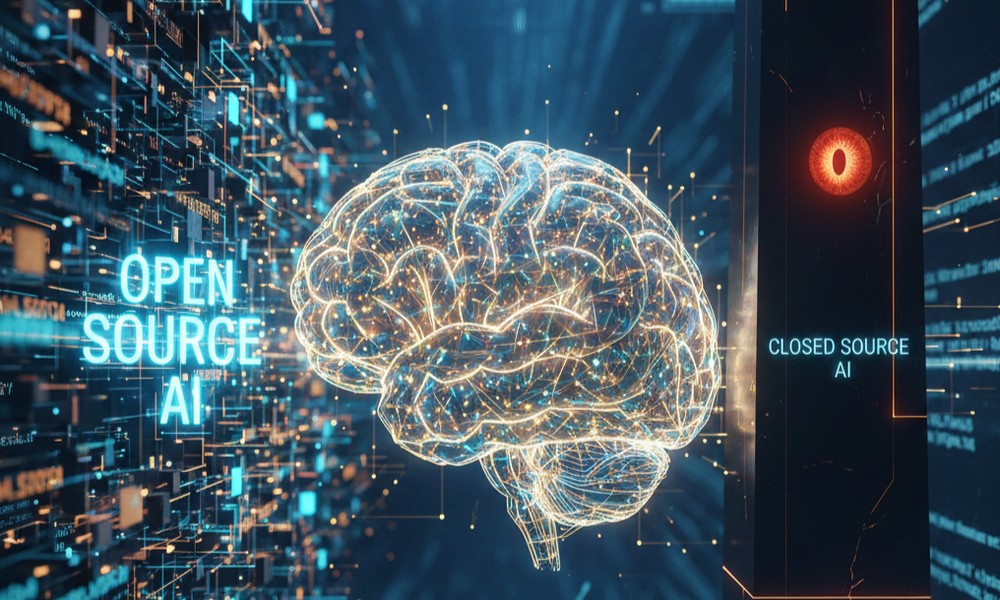
In recent years, artificial intelligence has witnessed rapid innovation driven by the usual tech giants and a growing ecosystem of open-source contributors. Traditionally, AI progress was spearheaded by companies like Google, Microsoft, OpenAI, and Amazon, who had the computing power, funding, and proprietary data needed to build large-scale models. However, a new wave of open-source AI models is changing the game. These freely accessible models are catching up with their proprietary counterparts and, in many cases, offering viable alternatives that are more flexible, cost-effective, and community-driven.
This evolution is not just about challenging Big Tech’s monopoly. It is a sign that smaller companies, academic researchers, and individual developers can now build, share, and scale powerful AI tools. Open-source AI models empower innovation worldwide, including regions like India, where upskilling through an AI Course in Bangalore opens doors for thousands of professionals to engage with these cutting-edge technologies.
What Are Open Source AI Models?
Open-source AI models are artificial intelligence systems whose architecture, training methodology, and weights (in some cases) are made publicly available. This means anyone can download, study, modify, and use these models for academic, personal, or commercial purposes. Unlike closed-source models such as GPT-4 or Claude, which are restricted to API access or commercial licensing, open-source models encourage community collaboration and transparency.
At their core, these models represent a democratic approach to technology development. They reduce the entry barrier to sophisticated AI and foster a healthy culture of shared learning and innovation. In recent years, this open development model has been responsible for some of the most impressive advances in machine learning technologies and natural language processing (NLP).
Why Open Source Is Disrupting the Status Quo
Big Tech’s AI dominance largely rests on the combination of access to proprietary data, state-of-the-art hardware, and massive engineering teams. While these resources are hard to replicate, the rise of open-source projects has proven that collaboration and transparency can deliver comparable, if not superior, results.
Some of the key advantages of open-source AI models include:
- Accessibility: Anyone with internet access and moderate computing power can use or fine-tune these models.
- Customizability: Developers can adjust these models to specific needs, industries, or languages.
- Cost-effectiveness: There are no licensing or usage fees for most open-source models.
- Security and Trust: Transparency in training data and algorithms allows for scrutiny and fosters trust, particularly in sensitive applications like healthcare and finance.
Top Open Source AI Models Challenging the Giants
Let us explore some of the most prominent open-source AI models that are beginning to rival the offerings from Big Tech:
Mistral and Mixtral
Mistral AI, a Paris-based startup, has developed state-of-the-art language models like Mixtral, which uses a mixture-of-experts architecture. Mixtral activates only a subset of its neural networks for each task, making it both computationally efficient and extremely powerful. Released under an open license, Mixtral has impressed the global AI community with its performance on standard benchmarks, challenging proprietary models in terms of reasoning and fluency.
Meta’s LLaMA Series
Meta’s LLaMA (Large Language Model Meta AI) family was pivotal in the open-source AI landscape. LLaMA 2, released in mid-2023, offered models with 7 to 70 billion parameters, capable of performing on par with some of the most well-known proprietary models. Meta’s release empowered researchers to explore language modelling and encouraged commercial experimentation and downstream product development.
Databricks’ DBRX
DBRX is a large language model introduced by Databricks, known for its modular design and high performance on various tasks. It supports code generation, text summarisation, and even translation. DBRX’s integration with enterprise-grade data solutions makes it ideal for companies looking for scalable, private AI deployments.
Falcon by TII (UAE)
Falcon, developed by the Technology Innovation Institute in Abu Dhabi, is another powerful open-source LLM that has proven its worth in English and multilingual NLP tasks. Falcon 180B, the largest of the models, has outperformed several commercial models in reasoning and logic benchmarks, marking a significant milestone in international AI development.
OpenChat and OpenHermes
Built on LLaMA and other foundations, these fine-tuned models offer conversational AI capabilities rivalling ChatGPT. Communities on Hugging Face and GitHub continuously improve these models, offering updates that will enhance safety, coherence, and usefulness with every iteration.
Use Cases and Industry Adoption
Open-source AI models are not just experiments in research labs. They are actively being used in:
- Healthcare: For clinical document summarisation and patient query chatbots.
- Education: In intelligent tutoring systems and adaptive learning platforms.
- Finance: For fraud detection, document processing, and report generation.
- Customer Service: Via fine-tuned chatbots that understand domain-specific terminology.
These models’ widespread applicability, cost savings, and transparency make them attractive even to enterprises that previously relied solely on cloud APIs from Big Tech.
Empowering Learners and Developers
One of the most exciting aspects of the open-source AI movement is how it creates opportunities for learning and innovation. Whether you’re an engineer, a researcher, or a student, access to these models enables hands-on experimentation and skill development.
In cities like Bangalore-India’s tech capital-the demand for AI expertise is booming. Taking an Artificial Intelligence Course in Bangalore now means not only learning about AI theory but also working directly with real-world open-source models like Mixtral or LLaMA. This practical exposure helps learners bridge the gap between academic knowledge and industry applications.
Such training equips professionals with the tools to build, deploy, and contribute to these models, making them active participants in the AI revolution.
Challenges Ahead
While open-source AI models are making remarkable strides, they do face challenges:
- Compute Requirements: Many of these models require high-end GPUs for training or fine-tuning.
- Data Bias and Safety: Open training datasets can inherit biases, and the models need rigorous fine-tuning to ensure safety and fairness.
- Fragmentation: With numerous forks and variants, maintaining a standard or choosing the correct version can be overwhelming.
- Governance: As models grow more powerful, questions about their responsible use and licensing become more critical.
The Road Ahead
Despite the challenges, the trajectory is clear. Open-source AI is here to stay-and it is growing more capable daily. As more institutions, governments, and individuals contribute to this ecosystem, innovation can accelerate even further. Already, organisations across sectors are exploring how to adopt and adapt these models for their unique needs.
In the future, we might witness a decentralised AI ecosystem where open collaboration, not corporate control, drives progress. And that is a future worth building.
Conclusion
Open-source AI models are no longer just academic experiments; they are robust, scalable, and practical tools that reshape the competitive landscape of artificial intelligence. They offer developers freedom, enterprise flexibility, and learners access to cutting-edge technologies. As community-led projects continue to improve and challenge Big Tech’s dominance, the power of AI is gradually becoming more equitable and widespread.
From language modelling to conversational agents, the open-source revolution proves that world-class innovation can come from anywhere, not just from Silicon Valley. Now is the perfect time for anyone passionate about AI to engage, learn, and contribute to this transformative movement.
For more details visit us:
Name: ExcelR – Data Science, Generative AI, Artificial Intelligence Course in Bangalore
Address: Unit No. T-2 4th Floor, Raja Ikon Sy, No.89/1 Munnekolala, Village, Marathahalli – Sarjapur Outer Ring Rd, above Yes Bank, Marathahalli, Bengaluru, Karnataka 560037
Phone: 087929 28623
Email: enquiry@excelr.com
